
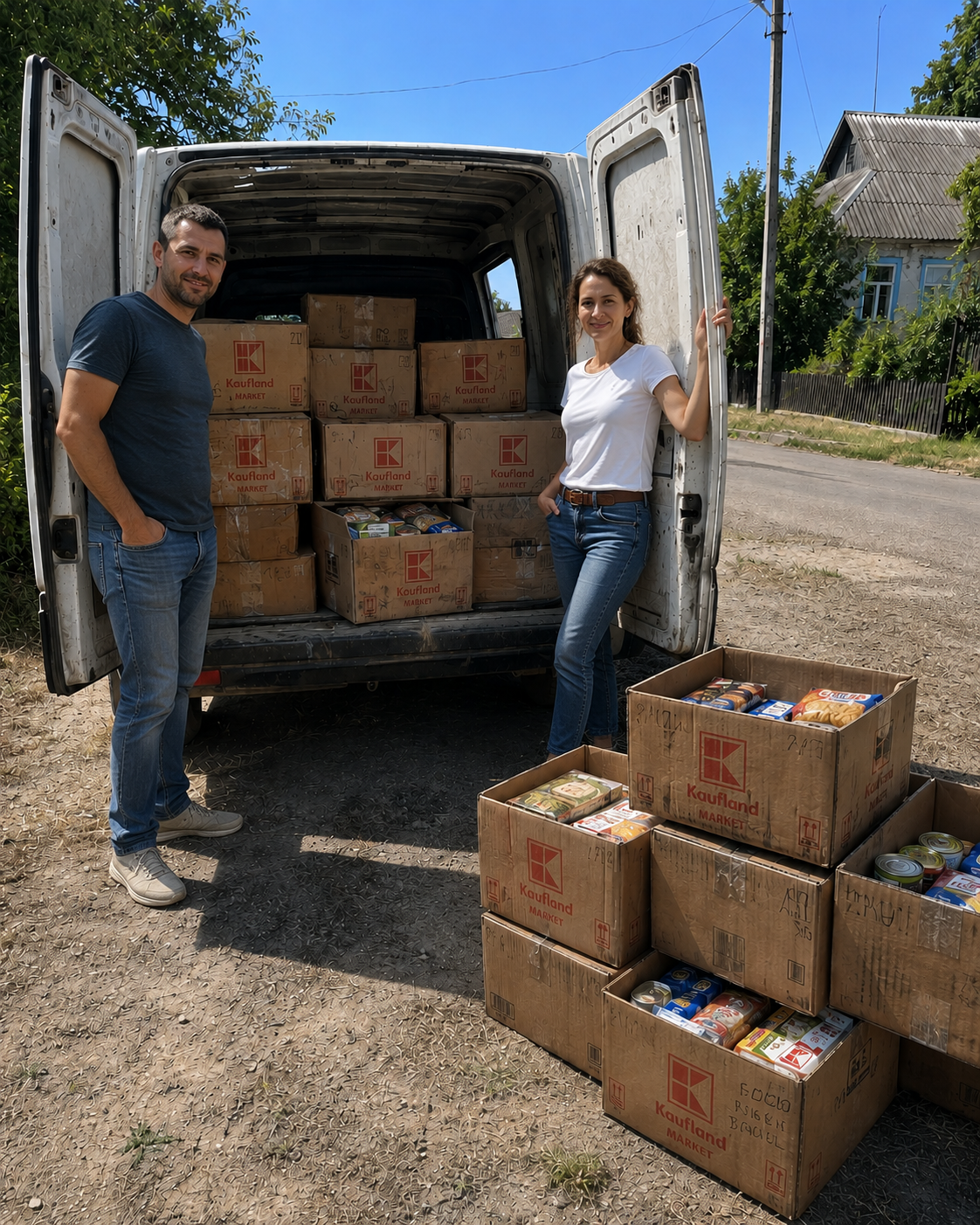
A significant portion of the food and basic household supplies distributed by Care4Ukraine begins not in a warehouse or through a large international aid program, but in ordinary supermarkets and distribution systems across Central Europe.
Large grocery chains throughout Poland, the Czech Republic, Germany, and other European countries routinely have food that can no longer be sold through their normal retail channels. Sometimes a product is approaching its best-before date. Sometimes packaging has changed, seasonal merchandise is being removed, inventory has been overstocked, or a particular item simply has not sold as expected. The food may have lost its commercial value while remaining perfectly suitable for consumption.
Rather than allowing these products to become waste, many European retailers work with food banks, charitable organizations, churches, community organizations, and other nonprofit groups to redistribute them. European food-waste policy specifically encourages safe, edible surplus food to be redirected for human consumption whenever possible.
This is a substantial system. Biedronka, for example, reports that it has donated unsold food since 2016 and works with roughly 140 charitable organizations. In 2024 alone, the company reported redistributing more than 10,000 tonnes of food through its stores. Kaufland works with the Federation of Polish Food Banks, Caritas Polska, and other charitable organizations, providing food that can no longer be sold but remains fit for consumption. Kaufland operates a similar program through food banks in the Czech Republic. ALDI has long used comparable arrangements with food banks and local charities in Poland, Germany, and other European countries.
How Care4Ukraine Uses the Network
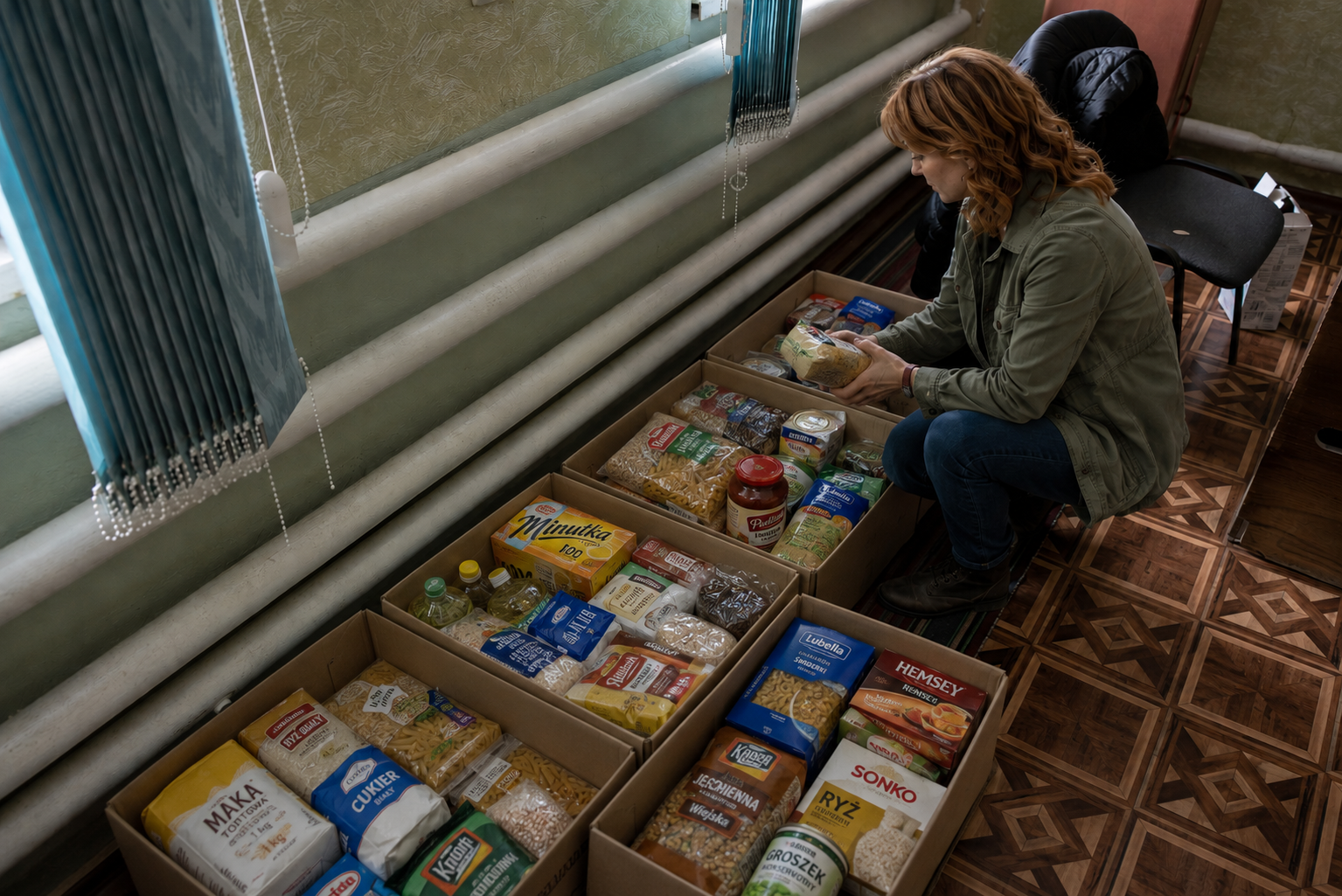
Care4Ukraine participates in this broader redistribution network through charitable relationships and local sources. We receive quantities of non-perishable food, dry goods, basic hygiene products, and other useful supplies that might otherwise have been removed from normal commercial circulation. These goods are sorted, checked, stored, and incorporated into the supplies we accumulate for distribution in Ukraine.
For us, this is particularly valuable because much of what we need is not specialized humanitarian equipment. It is ordinary food and household material: pasta, rice, cereal, canned goods, flour, cooking staples, packaged foods, soap, toothpaste, hygiene products, and other everyday necessities.
Acquiring these products through European surplus and charitable-distribution systems allows limited donated funds to be reserved for items that must be purchased, as well as transportation, fuel, storage, generators, medical supplies, and other expenses.
Building Inventory for Winter
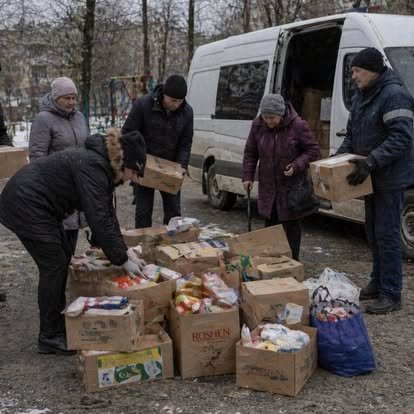
It also explains why Care4Ukraine builds inventories gradually. We take advantage of supplies when they become available, sort and consolidate them, and move them east as transportation and conditions permit. During the summer and early autumn, much of this material is accumulated specifically with winter in mind.
What might represent excess inventory to a supermarket in Poland, the Czech Republic, or Germany can become several weeks of basic food and household supplies for dozens of families in Ukraine. The system reduces waste on one end and puts usable goods to work where they are genuinely needed on the other.
Sources and further reading
Retail food-redistribution background and figures: Biedronka — Przeciwdziałanie marnowaniu żywności; Biedronka 2024 Sustainability Report; Kaufland Polska — Ratowanie żywności; and ALDI SÜD — Food Waste.
Leave a Reply